
Two men separated by class, one an Officer, the other a Convict, arrived into Sydney Cove as part of the First Fleet in 1788. Both men, left the colony and returned to England, in the 1790s. Both returned in 1803, the Officer in-change of forming a settlement at Port Phillip (Sullivan Bay, near modern day Sorrento), Victoria and the Convict, as a free man, and settler. In 1804 they left Sullivan Bay, leading to its’ abandonment, for the Derwent (Hobart), Van Diemens’ Land Continue Reading »
PHILLIP ISLAND HIBISCUS (HIBISCUS INSULARIS)

The Geelong Botanic Gardens, in the city of Geelong, Victoria, Australia, is set on 200 acres, and were established in 1850. They are the fourth oldest botanic gardens in Australia. The garden contain singular trees listed under the National Trust of Australia (Victoria) Register of Significant Trees. Since development, the gardens have grown and transformed to include a variety of gardens and lawns, including the modern and innovative 21st century garden. Over at Continue Reading »
THE RESCUE OF PETER WHITE – SAILMAKER, HMS SIRIUS

Saturday, 11th July 1789Peter White, the sailmaker in the Sirius, disappeared from Sydney Cove. Sunday, 12th July 1789Parties went out searching for Peter White without success. Monday, 13th July 1789The search for Peter White continued, both by land and by water. Guns were fired from the Sirius to direct him to the ship. Tuesday, 14th July 1789Parties were again out searching for Peter White. Captain John Hunter and Davis Collins, returning from an expedition toward the mountains, were Continue Reading »
HISTORICAL TOMBSTONE
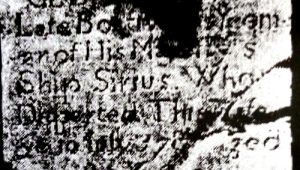
GEORGE GRAVES On November 24th, Mr Eagar, the contractor for lowering the roadway from George Street to the Circular Quay, at the south of the Mariners' Church unearthed an interesting monument of the early days of the colony, in the shape of a headstone, some 2 feet high by 1 foot 8½ inches broad, raised to the memory of a seaman of the First Fleet which visited these shores. It bore the following inscription " In Memory of George Graves, Majesty's ship Sirius, who departed this Continue Reading »
JAMES KIRBY

Who could imagine that a wooden chest box belonging to First Fleeter, Private Marine James Kirby, would be on display in the Old Geelong Gaol Museum. Having travelled with him on the convict ship Alexander to Sydney Cove in 1788, it would later find its way to Victoria and eventually be donated to the Museum by a Kirby descendant. HM Prison Geelong was a maximum security, Australian prison located on the corner of Myers and Swanston Streets in Geelong, Victoria. The Geelong Gaol first Continue Reading »
SYDNEY COVE MEDALLION
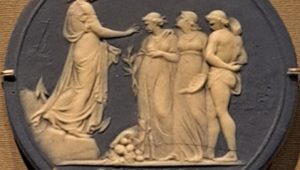
The (V&A) Victoria and Albert Museum in London is the world's largest museum of applied arts, decorative arts and design, housing a permanent collection of over 2.8 million objects. It was founded in 1852 and named after Queen Victoria and Prince Albert. Straight from the UK’s V&A, and exclusive to Townsville, Queensland, 6 April - 24 August 2025, Wedgwood: Artists and Industry, showcased highlights from over 200 years of Wedgwood ceramics and design. Wedgwood is one of Continue Reading »
THE FEMALE ORPHAN SCHOOL

By Anne Gibson. The need for a female orphanage and education of the children of the colony had become apparent in Sydney. When Philip Gidley King returned to New South Wales as Governor, he and Mrs. King perceived the need to establish a class for girls similar to the one he had founded on Norfolk Island. After discussion with the Reverend Richard Johnson, King wrote to the Duke of Portland setting out his plans for an Orphan School. A committee was formed consisting of Rev. Continue Reading »
JOHN CAESAR – THE ESCAPING CONVICT

By Lord Nicholas Hodgkinson John Ceasar (known as Black Caesar) was a convict who came out on the transport ship Alexander. He was tried and convicted for stealing 240 shillings from a dwelling house and was sentenced to transportation for seven years. During those seven years he was notorious in his behaviour, often stealing. On 29 April 1789 Caesar was tried in the colony for theft and sentenced a second time, this time, to a life sentence. He escaped a Continue Reading »
PHEBE/PHOEBE FLARTY

By Ann Gibson ADVENTURES OF A FIRST FLEET LASS Saturday, 7th June 1788Phebe Flarty was charged on the suspicion of making away with 2 pairs of stockings, I pair of shoes, 1 waistcoat, 1 new shirt, 1 pair of trousers, and 1 silk handkerchief, the property of John Romain. Ann Smith and Phebe Flarty gave evidence. Romain said that he had given the articles to Ann Smith to take care of for him. On Wednesday the 4th Phebe Flarty was very much in liquor and had to be put to bed by Continue Reading »
CHILDREN OF THE FIRST FLEET

When the 11 ships of the First Fleet sailed from Portsmouth on 13 May 1787, there was many young people aboard shattered over six of the ships. Three convict’s children embarked on the First Fleet died on the voyage. Babies were born alive after sailing of two died before the voyage’s end, with births and deaths recorded in 1788. Most of the children of Marines left when the regiment sailed on the Gorgon in 1791. THE CHILDRENAbel/Tilley, William (1787 – 1788) - son of convict Continue Reading »
